ECOWAS – Strengthening the capacity of the complaints-handling mechanism in the implementation of the ‘ROGEAP’ project.
ABUJA, 20 September 2023 – The ‘ECOWAS’, as part of the ROGEAP, is a pioneering initiative aimed at increasing access to electricity for households, businesses and public institutions in 19 West African countries. This ambitious project, funded by the World Bank, the Clean Technology Fund (CTF) and the Directorate-General for International Cooperation (DGIS) of the Government of the Netherlands, seeks to revolutionise the region’s energy landscape by promoting the use of modern off-grid solar technology. The ‘ROGEAP’ is structured around two main components: the development of a regional market and access to finance for off-grid solar system companies.
As part of its commitment to managing environmental and social risks, the ROGEAP has set up a Grievance Redress Mechanism (GRM) Office. The main objective of the GRM Desk is to ensure an accessible, inclusive, transparent, efficient and harmonised GRM for those affected by the project and other stakeholders. To further strengthen this mechanism and improve internal capacities, the Project Implementation Unit (PIU) ROGEAP organised a capacity-building workshop on
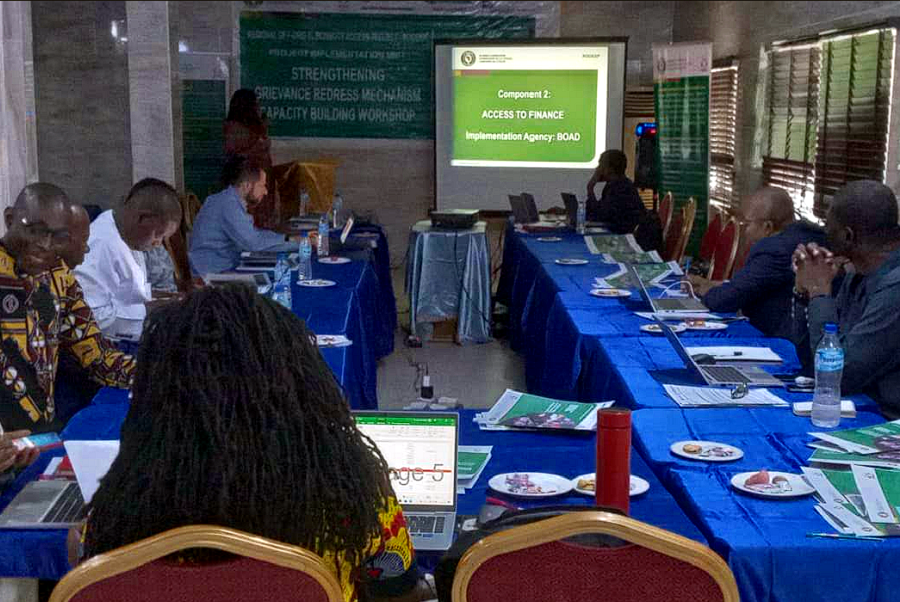
The Implementation Unit of the Regional Off-Grid Electricity Access Project (ROGEAP) organised a one-day training workshop in Abuja, Nigeria, with the main aim of strengthening the Grievance Redress Mechanism (GRM) and the internal capacities of the Implementation Unit, the Directorate for Infrastructure, Energy and Digitalisation and, by extension, the Environment and Climate Unit of the ECOWAS Commission.
The seminar was attended by representatives from the UIPROGEAP and the Directorate for Energy and Mines, the Directorate for Transport and the Environment and Climate Division. In addition, three (3) participants attended the seminar virtually.
Participants also took part in discussions on the draft GRM policy, the operational manual and the online complaints form. They put forward valuable suggestions on how to improve these documents to ensure that the GRM at ROGEAP is accessible, inclusive, transparent, efficient and harmonised.
ROGEAP’s UIP is committed to implementing these recommendations to further strengthen the GRM and ensure that it is an effective tool for resolving complaints and concerns raised by those affected by the project and other stakeholders. As the ‘ROGEAP’ project progresses, the enhanced capacity and improved GRM will play a key role in resolving complaints and concerns, thereby contributing to the project’s positive impact on the lives of its beneficiaries and the sustainable development of the region.
Mr Oumar Mbacke, a procurement specialist, outlined the agenda for the workshop, which laid the foundations for the comprehensive implementation of GRM within the ‘ROGEAP’ project. He presented the workshop agenda, which was reviewed and approved. The agenda comprised three main components:
- Presentations and discussions on the GRM policy framework, complaints management, reporting and the establishment of an effective GRM structure in the 19 Member States benefiting from the project.
- Presentation and discussion of the role of GRM Focal Points, the SEAH/GBV Survivor-Centred Approach, and a review of GRM case studies.
The seminar began with an opening address by Mr Bah F. M. Saho, Head of the Division for Energy Access and Alternative Energy, on behalf of the Commissioner for Infrastructure, Energy and Digitalisation, who welcomed all participants. He thanked the project’s funders and stakeholders for their invaluable contributions. He emphasised the fundamental role of the GRM within the context of the ‘ROGEAP’. She emphasised the need for all complaints and concerns to be resolved amicably, positioning the GRM as a cornerstone of the project’s success. Participants were encouraged to engage actively and put forward suggestions to improve the project’s GRM.
The subsequent presentations on GRM were led by the Consultant from the ‘ROGEAP’ – Complaints Redress Officer, Ms Perpetua Ngozi Okafor. These presentations covered a wide range of topics, from an introduction to the ‘ROGEAP’ and the identification of environmental and social operational risks, to a detailed understanding of the GRM framework, the policy framework, communication and outreach strategies, value chains, processes and workflows.
Ms Okafor also addressed the critical issues of gender-based violence (GBV) and sexual exploitation and abuse/sexual harassment (SEA-SH), providing case studies and recommendations for managing these complex concerns through the GRM.
Following the presentations, the participants took an active part in the discussions and provided valuable information and recommendations.
The workshop chair, Mr Sylla Elhadji, Project Coordinator for the ‘ROGEAP’ and Senior Adviser, thanked the participants in his closing address for their contributions and active involvement throughout the workshop. He officially closed the meeting, marking the end of a productive and insightful capacity-building workshop for the Grievance Redress Mechanism under the ‘ROGEAP’ project. The commitment and involvement of all stakeholders exemplify the dedication to ensuring the success of this vital initiative in the West African region.
ABUJA, NIGERIA, September 2023. Communications
Department ROGEAP – Article/Blog post